Introduction to the Functions of the Shoulder Press Machine
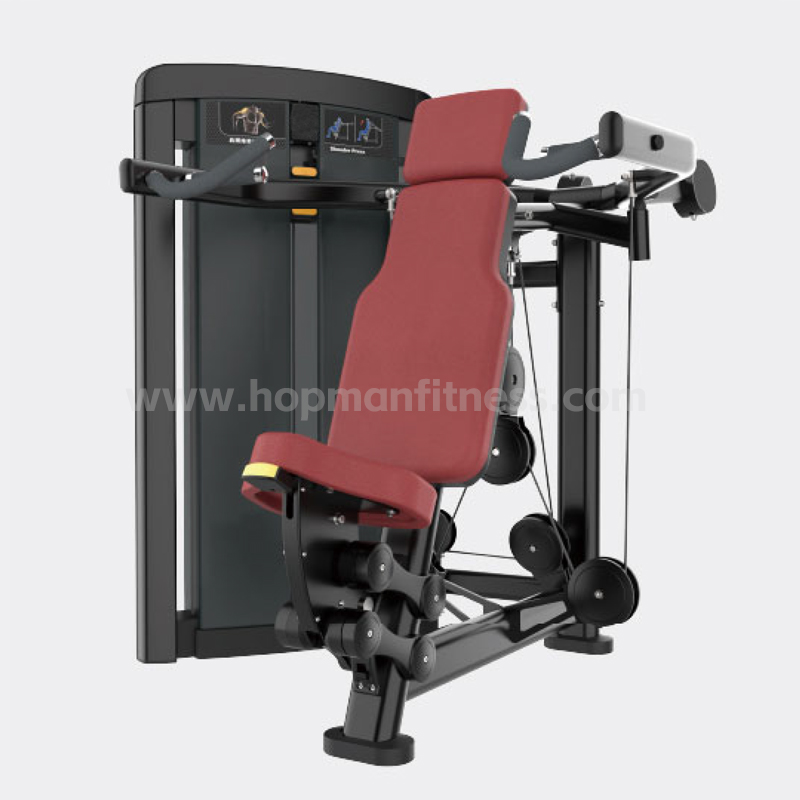
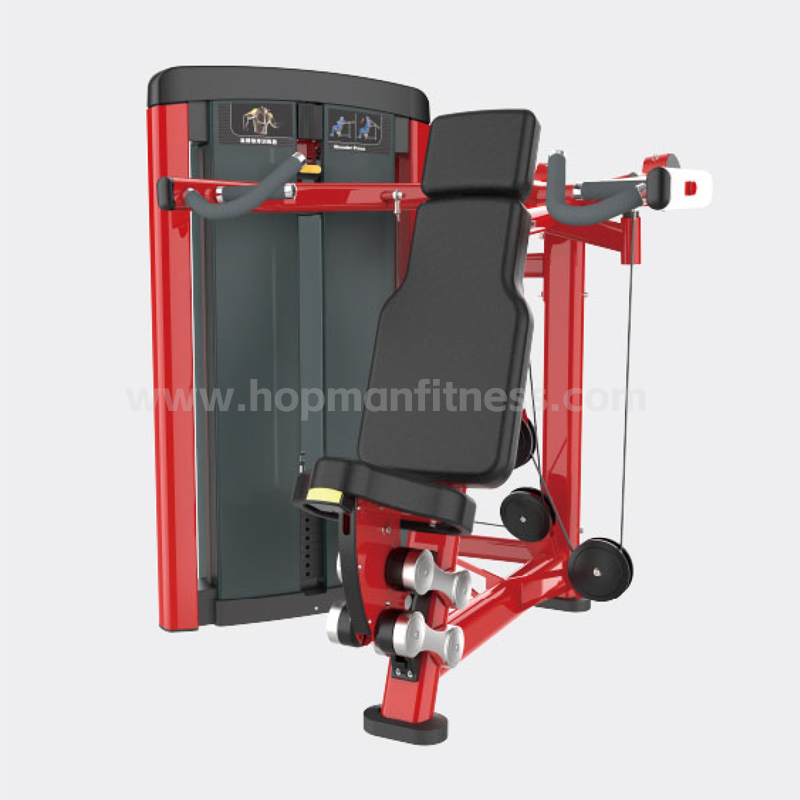
The shoulder press machine (also known as the seated shoulder press machine) is one of the core strength training equipment in gyms. It is specially designed for precise shaping, strength enhancement and rehabilitation training of shoulder muscles. With its stable and controllable movement trajectory and ergonomic structure design, it adapts to different needs such as beginners' entry, advanced muscle building and shoulder rehabilitation, balancing training efficiency and safety. It is an essential equipment for creating full shoulder lines and improving upper limb functional strength, widely used in professional gyms, studios and home fitness scenarios.
I. Core Training Functions: Precise Targeting and Efficient Shaping
The core function of the equipment focuses on precise stimulation of shoulder muscles. Through scientific movement trajectory design, it minimizes compensation, makes the training effect directly reach the target muscles, and at the same time takes into account the balanced development of synergistic muscles.
-
Targeted Muscle Group Enhancement: It mainly focuses on precise stimulation of the deltoid muscles (mainly the anterior and middle bundles). EMG test data shows that the activation degree of the middle deltoid bundle can reach 78% in standard posture, which is significantly higher than that of standing press. It is the core movement carrier for shaping shoulder width and creating "right-angle shoulders"; at the same time, it synergistically activates the triceps brachii, upper trapezius and serratus anterior, helping to strengthen the overall upper limb strength, avoiding postural problems caused by unbalanced force of a single muscle group, and making the shoulder lines more full and symmetrical.
-
Adaptation to Multiple Training Goals: It can flexibly meet different training needs. Beginners can establish a standardized movement pattern through light-weight training to lay a solid foundation for shoulder strength; advanced trainers can achieve muscle hypertrophy and strength improvement by increasing the load; rehabilitation groups can carry out low-intensity shoulder functional recovery training with the help of controllable resistance and fixed trajectory, reducing the risk of joint injury.
-
Expansion of Variant Training: It supports a variety of variant training. Different training focuses can be achieved by adjusting the grip distance - wide grip (10cm wider than the shoulder) focuses on the middle deltoid bundle, narrow grip (5cm narrower than the shoulder) strengthens the anterior deltoid bundle and upper trapezius, and standard grip (shoulder-width) takes into account the overall development of the shoulders; some models support single-arm alternating shoulder press, which can effectively improve the muscle strength imbalance between the left and right shoulders. Combined with techniques such as peak contraction and slow release, it can further enhance the muscle stimulation effect.
II. Structural Design Functions: Ergonomics, Stability and Convenience
The structure of the equipment has been optimized through biomechanics, taking into account stability, comfort and convenience, adapting to users of different heights and body types, reducing the physical burden during training, and making training more efficient and safe.
-
Ergonomic Support Design: It adopts an adjustable seat and an inclined backrest (the mainstream model is inclined at 45°, and some can adjust the angle), combined with thigh fixing baffles, which can effectively limit the trunk from leaning back to borrow force, reduce the lumbar spine pressure by more than 60% compared with standing press, and avoid waist compensation injury; the seat height can be flexibly adjusted to ensure that the push plate is flush with the acromion, and the scapula can be kept depressed and slightly adducted when the back is close to the backrest, ensuring standardized force application posture. The grip is made of non-slip and antibacterial material, fitting the arc of the palm, reducing hand fatigue during long-term training, and providing multiple gear grip distance options to adapt to different training needs.
-
Stable and Durable Structure: The body is made of thickened manganese steel frame (the thickness of commercial steel is ≥3mm), treated with electrostatic powder coating, which is corrosion-resistant and wear-resistant, and can bear high-frequency use and heavy load; the bottom is equipped with non-slip rubber feet to effectively fix the equipment, prevent shaking and sliding during training, and ensure training safety; the interior adopts high-quality bearings and steel wire ropes to ensure smooth pushing movement without jamming or abnormal noise, improving the training experience.
-
Convenient Adjustment Function: The resistance adjustment methods are divided into commercial pin-loaded type (weight range 5-120kg) and household magnetic control/hydraulic type (10-30 gears fine adjustment), which is simple to operate and can quickly adjust the load according to your own training level without complex operations; some commercial models adopt a split-motion design, supporting two people to train at the same time, improving the equipment utilization rate; most household models adopt a folding design, covering an area of <0.6㎡, which can be stored under the bed or in the corner after folding, saving space.
III. Safety Protection Functions: Multiple Guarantees for Safe Training
Aiming at the easy injury characteristics of shoulder training, the equipment is equipped with multiple built-in safety protection designs, which comprehensively reduce training risks from movement standardization, overload protection to equipment stability, adapting to users of different training levels.
-
Fixed Trajectory Protection: It adopts a fixed movement trajectory design, strictly limiting the pushing range, avoiding excessive shoulder extension or force deviation, reducing the risk of rotator cuff injury, especially suitable for people with weak shoulder strength or injury rehabilitation; some high-end models are equipped with 3D motion sensors to real-time monitor the shoulder joint angle, and automatically reduce resistance when it exceeds the safety threshold (0-120°), further improving the protection effect.
-
Overload and Anti-falling Protection: The weight system is equipped with anti-falling bolts to avoid the weight block falling during training; the commercial pin-loaded design can accurately control the load increment, and the household resistance adjustment is smooth, preventing muscle strain and joint injury caused by weight overload; when neck compensation (excessive protrusion of the trapezius muscle) occurs, it can be adjusted in time through the quick weight reduction design to ensure training safety.
-
Detailed Protection Design: The push plate is equipped with a buffer pad to reduce the impact force and noise during training; the seat and backrest adopt high-density sweat-proof buffer pads, which are both comfortable and durable, avoiding physical discomfort caused by long-term training; some models are equipped with a chest pad, which can further limit body swing, standardize the force application posture, and reduce the burden on the waist and shoulders.
IV. Additional Practical Functions: Intelligence, Convenience and Scene Adaptation
-
Intelligent Auxiliary Functions: High-end models integrate NFC and QR code technologies, which can provide personalized training plan guidance to help users standardize movements and formulate periodic training plans; some models are equipped with motion data monitoring functions, which can record training times, load, training duration and other data, facilitating users to track training progress and optimize training plans.
-
Scene Adaptation Functions: Commercial models focus on high load and high durability, equipped with multiple gear grip distances and split-motion design, adapting to the high-frequency use needs of gyms; household models focus on silence and space saving, adopting magnetic control/hydraulic resistance, low noise, and easy storage after folding, adapting to home, small studio and other scenes; wall-mounted models can save floor space, suitable for fitness scenes with limited space (it is necessary to confirm that the wall bearing capacity is ≥80kg).
-
Easy Maintenance Design: The equipment accessories are easy to disassemble, and vulnerable parts such as grips and weight pins can be replaced separately, facilitating daily maintenance; the resistance system of household models should be checked every 3 months, and the push plate trajectory of commercial models should be calibrated every month to ensure the long-term stable operation of the equipment; the surface of the body is made of easy-to-clean material, and sweat stains can be wiped off with a dry cloth to keep the equipment clean.
V. Summary of Core Advantages
The core advantages of the shoulder press machine lie in "precision, safety and convenience". Compared with the traditional standing press, its fixed trajectory reduces compensation, making shoulder training more efficient; the ergonomic design reduces the physical burden and adapts to different groups of people; while providing multiple safety protections, it takes into account the needs of commercial and home scenarios. Whether it is beginners' entry shaping, advanced muscle building, or shoulder rehabilitation training, training goals can be achieved through this equipment, which is an indispensable core equipment in upper limb strength training.
 HopmanFitness | Home & Commercial Gym Equipment - Hopman Fitness